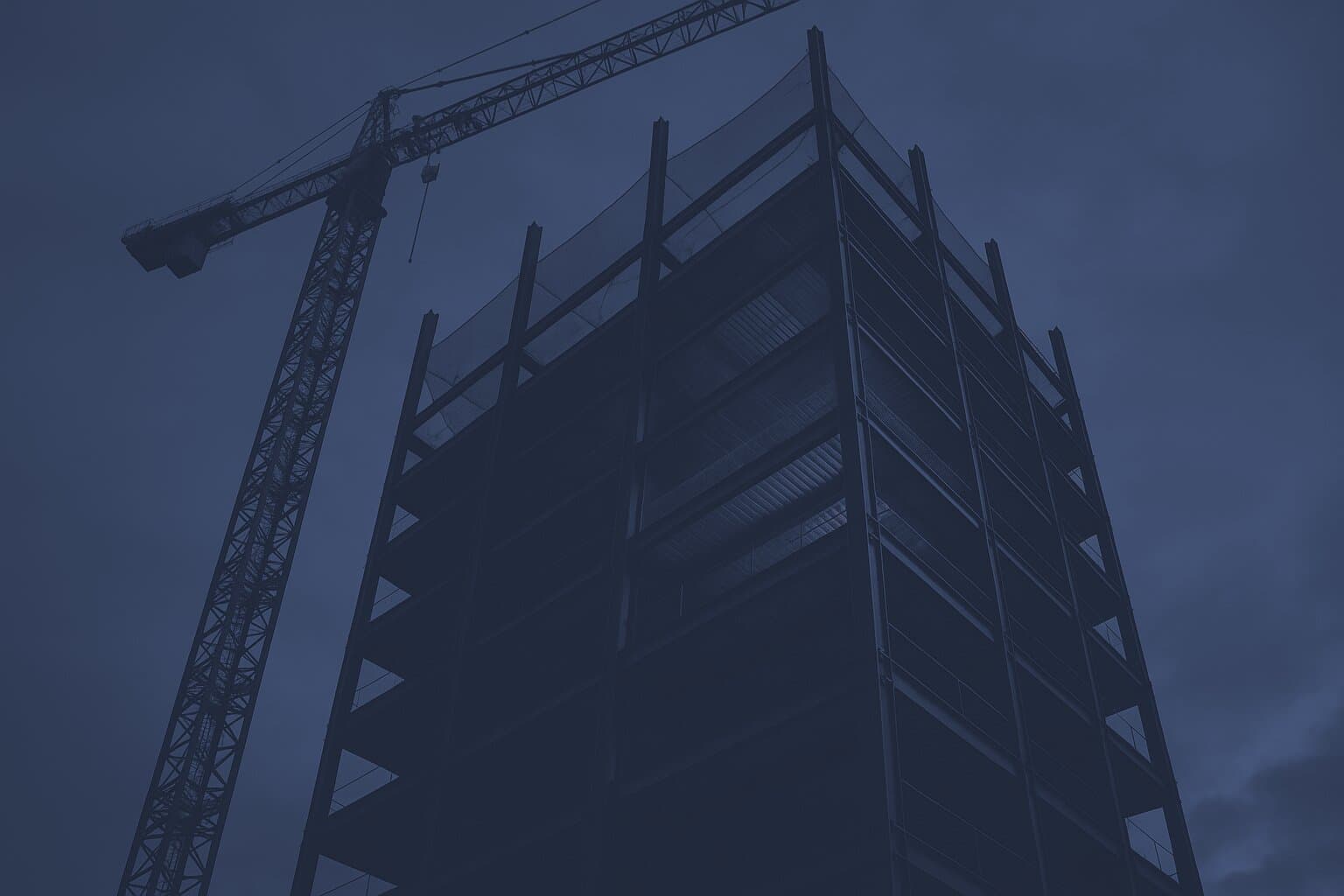
Premises, Security & Construction
Three kinds of case joined by one question: who controlled the place where this happened, and what did they know before it did.
Unsafe property, negligent security, falls, construction incidents, contractor and owner liability.
What premises, security and construction cases does The Biggest Cases handle?
Serious injuries on unsafe property, negligent security claims, falls from height and other construction incidents, and the owner, general contractor, property manager and security contractor liability behind them. The practice is licensed in Illinois and Florida and takes matters elsewhere with local co-counsel, and accepts attorney referrals as a standing part of the practice.
01What belongs in this category
A fall from height. A trench or excavation collapse. A struck-by or caught-between incident, a crane or hoist failure. An assault on property whose owner had every reason to expect one. A condition on a floor that a building already knew about because someone had reported it.
What does not belong here is the ordinary premises claim with a modest injury and an obvious defendant. These cases involve permanent harm and a defendant with a structure behind it — an owner, a management company, a general contractor, a security provider, or all four arguing about which of them held the duty.
02Who controlled the site
Control is proven from paper. The prime contract and the subcontracts, site safety plans, the general contractor's own inspection records, the delegation of safety responsibility, and the indemnity and additional-insured provisions that decide who ultimately pays whatever anyone is found to owe.
On a multi-employer worksite the injured person usually works for a subcontractor. That puts the compensation bar between them and their own employer while leaving the case against everyone else on site entirely intact — a case routinely missed, because the compensation claim opens immediately and looks like the answer.
For negligent security the equivalent record is the programme as run rather than as written: staffing, coverage of the hours when incidents actually happen, camera placement and whether anything was recording, and the response protocol staff were trained in as opposed to the one in the binder.
03What was known before
Premises liability turns on notice. A transient hazard nobody had a chance to discover is a different case from a condition that had been reported, or from a design that produced the same hazard repeatedly.
Negligent security turns on foreseeability, and foreseeability is proven with history: prior incidents on the property, calls for service to the address, incidents at comparable properties under the same management, and the internal risk assessments that frequently exist and say so plainly.
Construction turns on the safety programme in force. Toolbox talks, pre-task planning, prior stop-work orders, inspection history and near-miss reports establish whether the hazard was recognised before it produced an injury. In serious cases it usually was.
04For referring attorneys
The most common miss in this category is the third-party case sitting behind a compensation claim. An injured worker with an open compensation file and a permanent injury is frequently holding a substantially larger claim against parties who were never their employer.
The second is time. Site conditions are remediated within days of a serious incident, cameras overwrite, and the equipment involved is repaired or returned to a rental company. Early involvement is worth more here than in almost any other category.
Listing a case category describes the matters this practice accepts. It is not a statement that the firm has obtained any particular result in that category, and no outcome should be inferred from it. Prior results do not guarantee or predict the outcome of any future matter. A trial firm licensed in Illinois and Florida, handling catastrophic injury and complex liability matters nationwide through a co-counsel network.
Frequently Asked Questions
No, and it should not be read that way. This describes the matters the firm accepts. No case results appear on this site outside the results page, and no outcome in any category should be inferred from that category being listed here.
Often, yes. Compensation bars a claim against the worker's own employer and does nothing at all to the claim against the property owner, the general contractor, another trade on site, an equipment manufacturer or a rental company. Those are ordinary negligence and product claims. The compensation carrier's lien against any recovery is a reason to examine them rather than a reason not to.
It is proven with history rather than with the condition of the property. The question is whether the owner had reason to expect this kind of incident and what it did about that expectation — answered by prior incidents at the address, calls for service, comparable properties under the same management, and the internal assessments that have often already identified the risk in writing.
Founder Adam Zayed is a Licensed Illinois and Florida Attorney, and partner Andrew Miller is a Licensed Illinois and Florida Attorney. A matter governed by another state's law is brought with local co-counsel admitted there, which is the ordinary way any firm reaches a case outside its own admissions.
The arrangement is settled first and in writing — whether you stay in as co-counsel with an active role or refer the matter outright, and how fees divide under the rules of the governing jurisdiction. That happens before the case moves, not afterwards.
Tell us what happened
Case reviews are free and confidential. Attorneys holding a matter in this category can use the same form to open a referral conversation.